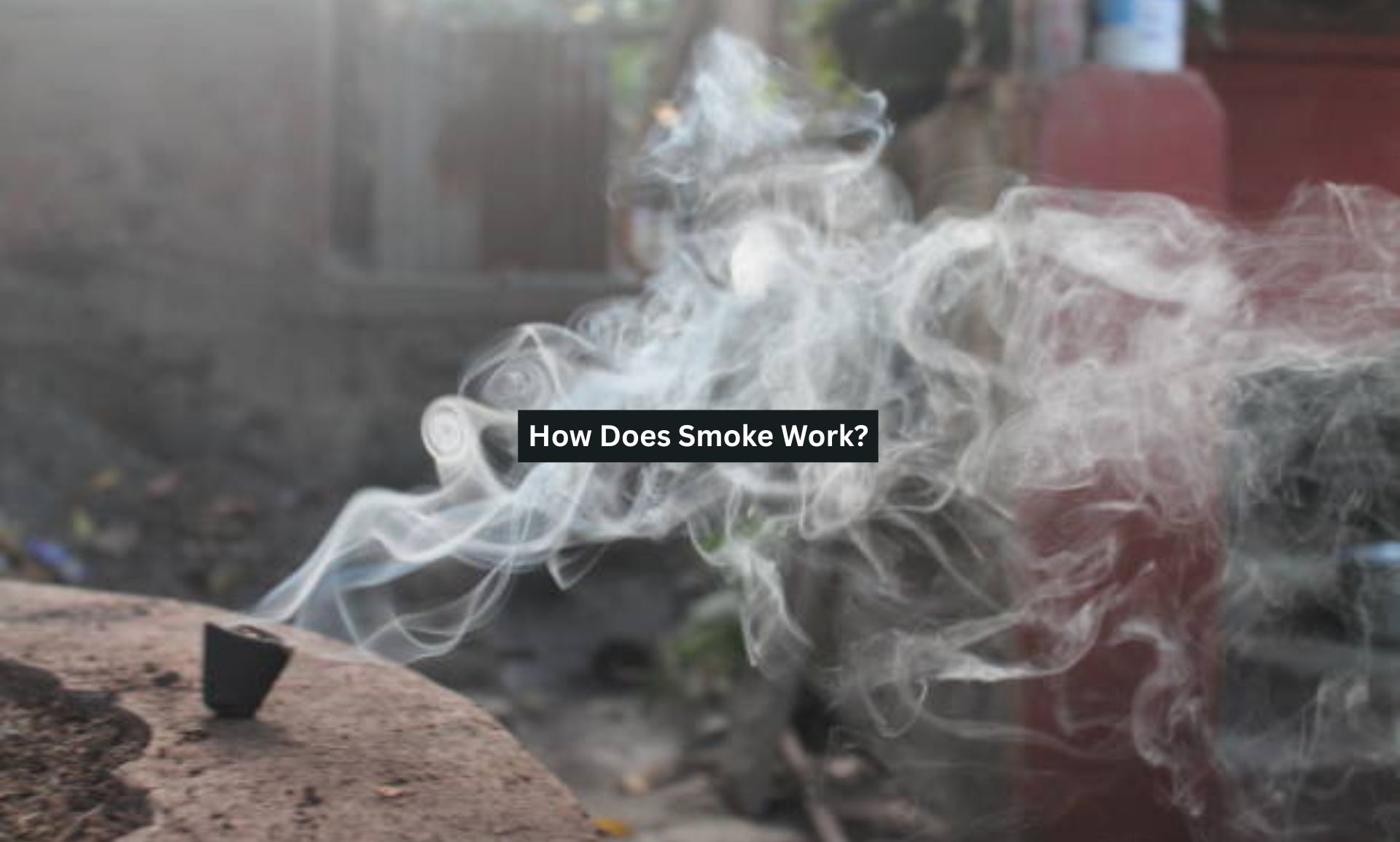
Particles of gas, liquid, and tiny solids make up smoke. Despite the fact that smoke can contain hundreds of different chemicals and fumes, the majority of a substance that isn’t metal (C). It is an essential part of living things. carbon (soot), tar, oils and ash.
Smoke is produced when there is insufficient oxygen to burn the fuel completely, which results in incomplete combustion. Everything burns in complete combustion, producing only water and carbon dioxide. When combustion is incomplete, not everything burns. These minuscule, unburned particles form smoke. Although each particle is too small to see with your eyes, when they combine, you see smoke.
The Smoke From A Wood Fire
Wood is composed of water.
Volatile Organic Compounds
A compound is volatile if, when heated, it evaporates and becomes a gas. carbon. Calcium, potassium, and magnesium—minerals that can’t burn—are found in the cells of the tree. The smoke you see when you put wood on a hot fire is made of hydrocarbons, which are volatile organic compounds. At around 149°C, they begin to evaporate. The hydrocarbons will catch fire if the fire is hot enough. Because the hydrocarbons are transformed into water and carbon dioxide when they burn, there is no smoke.
Charcoal
After the hydrocarbons in wood have been burned away, charcoal remains. It glows because it is still in contact with air (oxygen) and very hot. After the fire has burned for some time, the majority of the hydrocarbons—gases and particles of smoke—have been released, leaving only charcoal, which is almost entirely carbon with some minerals in it. With a red glow, the hot charcoal slowly burns. Charcoal only produces carbon dioxide, which cannot be burned again like other vapors, so there are no flames. At this point, very little smoke is produced.
A fire will become hotter and produce less smoke the faster it is reduced to glowing charcoal. The minerals that are left behind at the end of the fire are the ash, which is made when the carbon and oxygen react to make carbon dioxide.
Smoke Is Dangerous
The most common cause of death for victims of indoor fires is smoke inhalation. The effects of the smoke, not the fire, account for nearly 75% of home fire deaths. The smoke that is produced can be extremely noxious or irritating depending on the contents of the house.
For example, burning plastics often produce soot and poisonous gases like carbon monoxide and hydrogen chloride. Another danger is that smoke contains flammable compounds. With increased oxygen, these can ignite either through open flames or by their own.
Temperature
A measure of the degree of hotness or coldness of an object or substance. A thermometer that is calibrated in one or more temperature scales is used to measure temperature. The average energy of a body’s molecules is represented by the Kelvin scale temperature. A backdraught or flashover is the result of this. The flashover effect is the nearly simultaneous ignition of all combustible materials within an enclosed space.
Smoke also makes it hard to see. It is difficult to flee a fire because of this. Many deaths occur because people (including firefighters) become disorientated in smoke and can’t find their way out of a building.
Smoke can often cause more damage to a building than flames or the heat of the fire. Smoke will leave a lot of stains and smells that are hard to get rid of.
Related Material
Scientists are continually researching for ways to manage fire, reduce its destructiveness or even prevent it from happening. Read about this long-term project to test the performance of smoke alarm batteries and find out more about heat and smoke detectors. Mun Kit Cheong, a PhD student, utilized computational modeling to assist in predicting what would occur in the event that a truck caught fire in a tunnel. To put a stop to a fire or get out of it quickly, we need to be able to detect it. Often we are good detectors, but sometimes we need help.